Market Research for Game Studios: Turning Concepts into Confident Greenlights

Most game studios greenlight ideas on instinct and hope. Market research replaces hope with evidence by showing where demand exists, where markets are saturated, and where real opportunity lies.

Harish Alagappa

A studio is debating whether to greenlight a $25M co-op extraction shooter. The creative director loves the idea. The CFO is worried about market saturation. The publishing lead keeps hearing “extraction fatigue” at every conference.
Everyone has opinions. Nobody has evidence.
This is how most expensive bets begin. Intuition dressed up as strategy. Market research helps companies uncover potential risks that could cause damage if ignored.
Market research for games is not about post-launch dashboards or reading Steam reviews once the decision is already made. It is about answering hard questions early. Conducting market research early in the process is crucial to inform strategic decisions and avoid costly missteps. Who is the target market? How crowded is this market segment? What do players actually expect at this price point, on this platform, right now?
Effective market research helps studios replace guesswork with evidence before committing years of work, millions in budget, and entire teams to a concept. Companies that conduct market research report an ROI of over four times the cost of the research.
That is the space Lumos by Gameopedia is built for. As a specialized company providing market research for game studios, Lumos helps address key challenges and opportunities with actionable insights.
What Market Research Means for Games
At its core, market research is the process of collecting, analyzing, and interpreting data to inform business decisions. In games, that means understanding audiences, competitors, platforms, pricing, demand, and industry trends before production begins. Market research also helps businesses find customers for their products or services.
Game market research helps answer questions like:
Is there real demand for this idea or are we late to the trend?
How saturated is this genre or mechanic?
What price points work for similar games?
Which features correlate with player satisfaction and positive sentiment?
Who are the potential customers we are actually competing for?
How can we gather feedback from consumers to inform product development?
This goes beyond “research” as a vague concept. It is a structured market research process focused on reducing risk and providing in-depth insights, allowing companies to better understand the market and identify customers' needs and preferences.
Studios use a combination of primary information and secondary information. Primary research includes surveys, focus groups, playtests, and in-depth interviews with players, which are key methods for collecting feedback from consumers. Secondary research draws from existing data such as store performance, pricing history, review patterns, sales estimates, market size, and catalog-level analysis across platforms.
Most studios need both. The problem is that secondary research is often slow, fragmented, and manual.
That is where gaming-native market intelligence matters. Market research supports the development of effective business strategies by providing actionable insights that align with business objectives. It is also essential for developing brand loyalty and customer satisfaction.
How Game Market Research Works in Practice

A solid market research process follows a simple flow, with each step designed to address a specific business need or challenge.
Defining the Research Question
First, define the decision you need to make. Greenlight or kill a project. Choose between two concepts. Decide scope, pricing, or platform focus.
Identifying the Relevant Market Segment
Second, identify the relevant market segment. Broad genre labels are useless. “RPG” tells you nothing. “Turn-based tactical RPGs with deckbuilding and meta-progression on PC” tells you something actionable.
Gathering Data
Third, collect data. This includes release volume, pricing bands, review distributions, player sentiment, feature adoption, and competitive landscape signals. Good data collection is about precision, not volume.
Analyzing Results
Fourth, analyze patterns. Look for saturation, emerging trends, gaps in the market, and signals of fatigue. This is where market research turns into insights rather than reports.
Applying Insights to Strategy
Finally, use those insights to inform business strategy. Greenlight with confidence, adjust scope, reposition the concept, or walk away early. Measuring the success of market research is critical for evaluating outcomes and ensuring that research insights lead to effective decisions.
That last option is often the most valuable one.
The first step to effective market research is to determine the goals of the study, followed by determining who will be included in the research. The last step is for company executives to use their market research to make business decisions.
When conducting research, the best market research is a combination of primary and secondary information.
Primary research generally falls into two categories: exploratory and specific research.
Primary vs Secondary Research for Game Studios
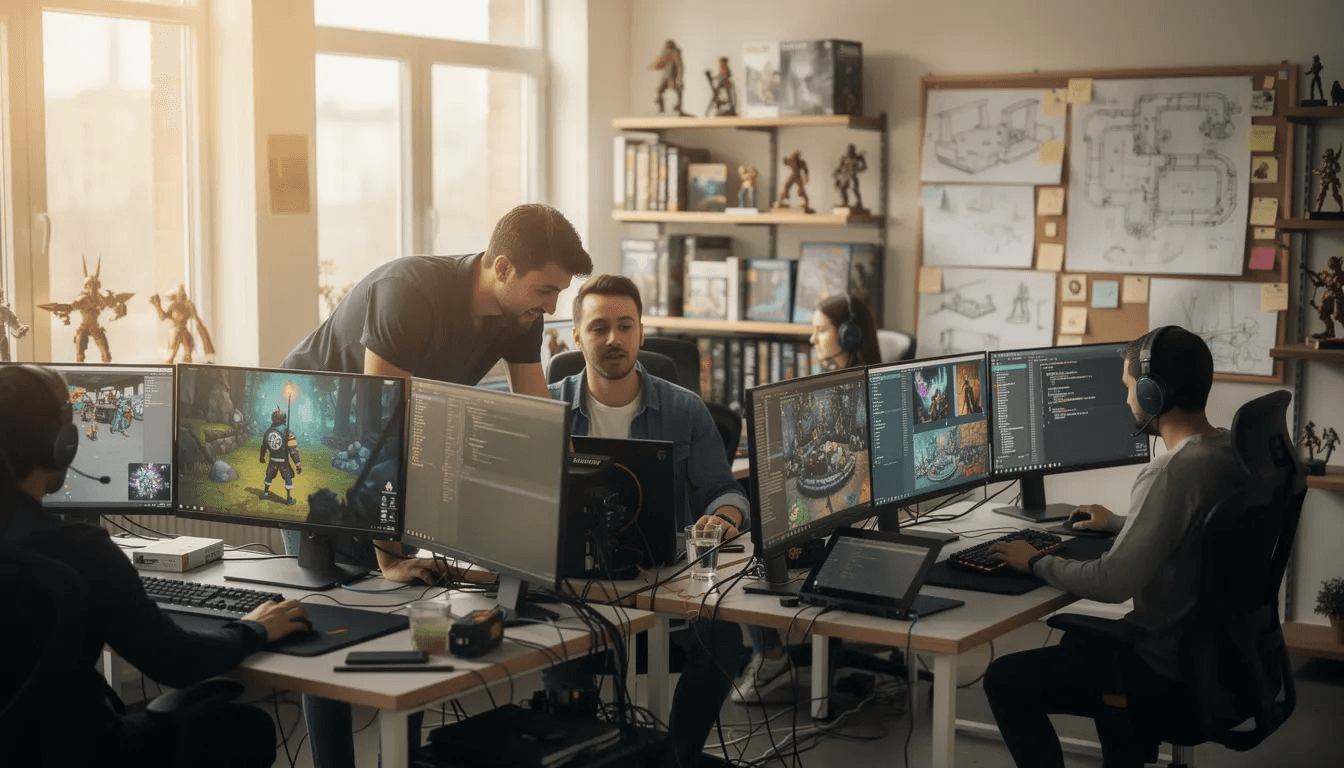
Primary research means gathering data yourself or hiring a firm to gather it for you. Surveys, focus groups, usability tests, concept testing, and qualitative research like in-depth interviews are common methods. Researchers design and conduct these studies to gather actionable insights. This is where you learn why players feel the way they do.
Secondary research uses existing data. Market reports, platform data, pricing history, competitive analysis, and structured game catalogs are typical sources. Market research firms and market research companies often provide structured data and analysis to help businesses understand the market as it exists today.
Market research can be conducted in-house or by a third-party firm that specializes in these services.
Comparing Primary and Secondary Research
Here’s a breakdown of the trade-offs between primary and secondary research:
Aspect | Primary Research | Secondary Research |
|---|---|---|
Depth & Specificity | Offers deep, specific insights tailored to your exact concept | Provides broad, contextual understanding of the market |
Speed | Typically slower due to data collection and analysis | Faster, as data already exists |
Cost | More expensive, requires more resources | Cheaper, often readily available |
Relevance | Highly relevant to your unique questions | May not answer questions about your exact concept |
Best Use | Validating specific ideas and hypotheses | Understanding competitive landscape and trends |
The best studios combine both. The best market research is a combination of primary and secondary information. Secondary research helps you understand the competitive landscape and industry trends. Primary research validates specific ideas against that context.
Lumos sits firmly in the secondary research layer. It gives teams fast access to structured market intelligence so primary research budgets are spent where they matter most. Market research companies like Lumos provide services such as data analysis, market sizing, and competitive benchmarking to support game studios.
Why Generic Market Research Fails Games

Traditional market research frameworks treat games like any other consumer product. That breaks down quickly.
Games have unique challenges. Mechanics shape consumer behavior in ways pricing models cannot capture. Live-service games behave differently from premium titles. Platform ecosystems distort demand, pricing expectations, and sales curves. Market research helps brands evaluate player perception, advertising effectiveness, and potential risks to their overall market position.
Mechanics shape consumer behavior in ways pricing models cannot capture. The importance of customer satisfaction is critical in developing brand loyalty and targeted advertising, as understanding what players enjoy directly impacts retention and marketing strategies.
High-level reports saying “RPGs are growing” are meaningless. What matters is which subgenres, mechanics, and combinations are overcrowded, underserved, or declining. After analyzing subgenres and trends, competitive analysis helps studios gain a competitive edge by identifying unique opportunities and making your business unique.
Market research in the gaming industry helps companies understand player preferences and behaviors, optimize gameplay, and inform monetization strategies and pricing. In the gaming sector, playtesting and user experience analysis are essential components of market research to ensure games meet player expectations and drive customer satisfaction.
Gaming-native market research requires gaming-native data.
Using Gaming-Native Metadata as Research Infrastructure
Gameopedia’s metadata structures every game across hundreds of attributes. Genres, mechanics, monetization, pacing, themes, co-op structure, progression systems, and more. Advanced technology, including custom research tools and proprietary data platforms, enhances data collection and analysis, providing deeper and more precise insights.
This is not enrichment. It is infrastructure.
Structured metadata allows teams to ask precise questions:
How saturated is this mechanic on PC since 2020?
What pricing works for this combination of features?
Which competitors are actually fighting for the same audience?
What emerging trends are showing early traction?
How does market demand or competition vary by location?
Lumos sits on top of this data and turns it into conversational analysis. Instead of weeks of spreadsheet work, teams can explore markets in minutes and get actionable insights grounded in real data. Economic indicators are also analyzed to assess market conditions and inform strategy. Predictive analytics are incorporated to forecast consumer behavior and help manage inventory or promotions. Desk research involves analyzing existing reports, statistics, studies, and public data to understand trends and context. Market research has evolved into an 'always-on' live intelligence feed utilizing AI and real-time data to guide business strategy.
This changes how market research supports business decisions. Fewer opinions. Better answers.
Market Research for Different Stakeholders
Designers use market research to validate mechanics, pacing, and fantasy before building content that players do not want. Customer analysis is also crucial, as it helps designers understand the specific needs, preferences, behaviors, and pain points of target audiences. Market research can uncover untapped niches, underserved customer segments, or emerging trends that designers can capitalize on.
Publishers use it to define audiences, choose platforms, set pricing strategy, and plan launches around competition. Regular monitoring of competitors allows publishers to stay proactive rather than reactive, adapting quickly to changes in the marketplace. Market research has helped clients overcome challenges and achieve success by informing strategic decisions and optimizing performance.
Investors use it to assess portfolio risk, market saturation, and long-term demand across genres. Success is measured by how effectively market research insights drive company performance and strategic initiatives.
Secondary research often involves gathering data from other businesses, such as trade associations and industry reports, to provide additional industry insights relevant to market analysis.
Same data. Different questions.
Lumos adapts market intelligence to each perspective without flattening nuance.
Building a Practical Market Research Plan
A strong plan starts with clarity.
Define the decision. Identify the market. Market research helps studios find customers and address specific business needs by uncovering key opportunities and challenges. It is also used to determine the viability of a new product or service. Analyze secondary research. Test specific assumptions with primary research. Synthesize insights into clear trade-offs. Market research enhances decision-making by providing the data needed for high-stakes decisions regarding pricing, product features, and effective marketing channels. It is a critical component in the research and development phase of introducing a new product or service.
The goal is not a report. The goal is confidence.
Studios that conduct effective market research avoid late pivots, reduce wasted spend, and align teams earlier. They make fewer bets and more deliberate choices. Measuring the success of market research is essential to ensure it achieves business goals and delivers actionable insights.
That is the real ROI.
Key Methods: From Qualitative Insight to Quantitative Confidence
Qualitative Methods
Qualitative research methods focus on understanding the motivations, attitudes, and behaviors of players. These include:
In-depth interviews
Focus groups
Playtests
Observational studies
These approaches provide rich, detailed feedback that helps studios understand why players feel the way they do and what drives their engagement.
Quantitative Methods
Quantitative research methods rely on numerical data and statistical analysis to identify patterns and trends. These include:
Surveys with large sample sizes
Data analysis of sales, reviews, and player metrics
Market sizing and segmentation
Competitive benchmarking
Quantitative methods help studios validate assumptions, measure demand, and forecast potential performance with confidence.
Conclusion: Make Hits, Not Bets
Market research does not replace creativity. It protects it.
When teams share a clear view of the market, debates become productive. Hunches become hypotheses. Greenlights become informed decisions.
Lumos exists for the moment when the stakes are highest and the uncertainty is greatest. Pre-production. Before the money is spent. Before the team is locked in.
If you are planning new game concepts and want evidence instead of opinions, start with better market research. Start with Lumos.
Make hits. Not bets.
Click Here to Try Lumos for Free
Harish Alagappa
Senior Content Writer
@Gameopedia
Senior Content Strategist. Played an irresponsible amount of Left 4 Dead 2 in college. Now I spend far too much time on Settlers of Catan. Favorite games? Ghost of Tsushima and Crush, an obscure PSP title that deserved better. I believe video games are the defining artform of our time. Why? Stick around and find out.