
The "Wall of Text" is a Feature, Not a Bug: How Star Trek Voyager Boldly Went Into Deep Lore
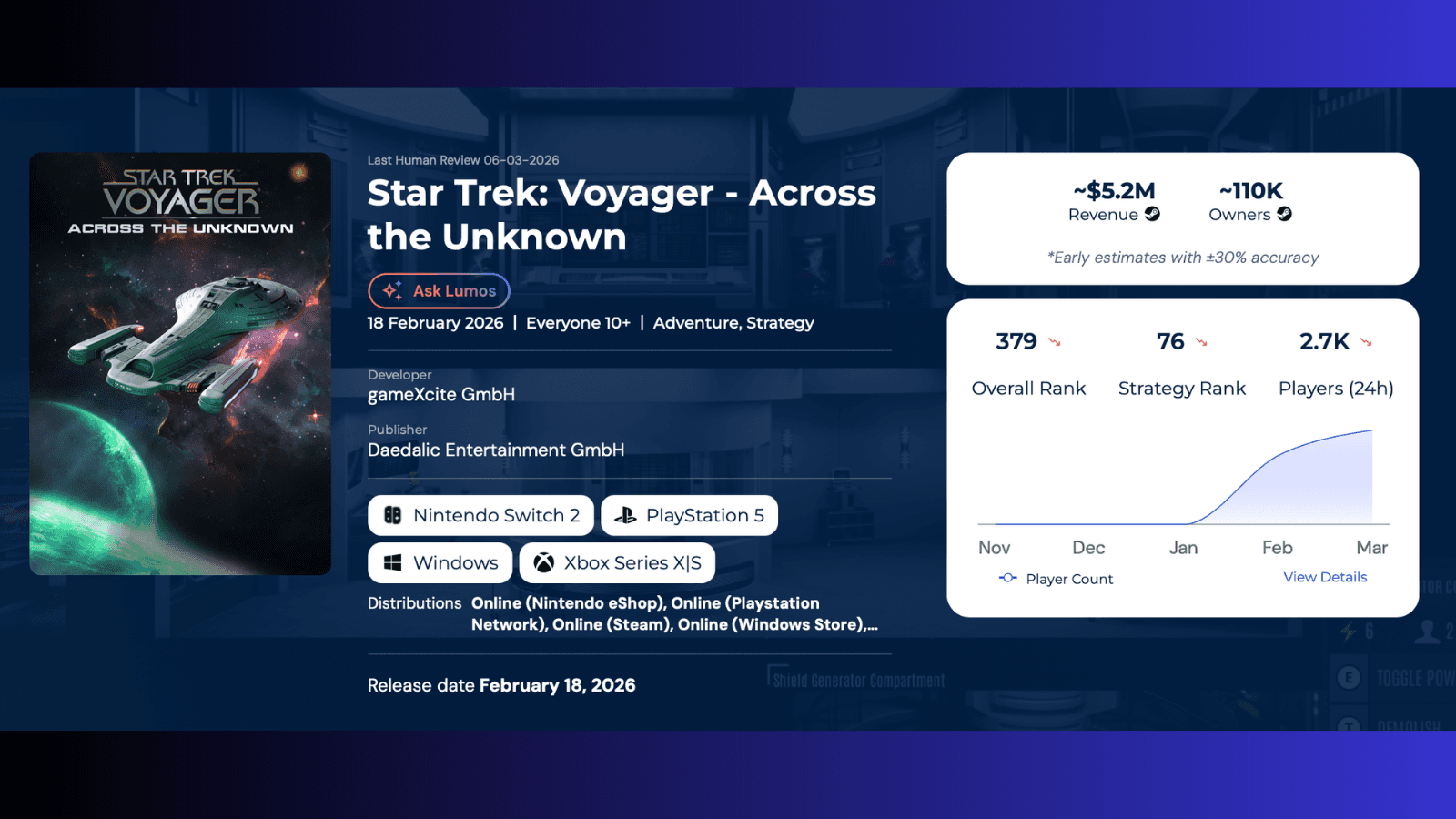
Is "too much dialogue" a design flaw or a masterstroke? Analyzing Lumos sentiment data to see how Star Trek: Voyager – Across the Unknown subverts player expectations by leaning into narrative density.

Harish Alagappa

In the hierarchy of modern game design, there is a sacred commandment that developers ignore at their peril: Thou Shalt Not Make the Player Read.
We’ve been conditioned to believe that if a game isn’t a kinetic explosion of "gameplay loops," "progression systems," and "visceral combat feel," it’s failing. If you look at the sentiment analysis for 95% of the AAA market, the conversation is dominated by how the game feels in the hands. The story is often just the set dressing we skip to get back to the shooting.
But then there’s Star Trek: Voyager – Across the Unknown.
Run a sentiment analysis in Lumos, and the data pulled a "Cillian Murphy in Oppenheimer". It was intense, focused, and completely subverted the blockbuster trend.

The Narrative High-Ground
According to the Lumos data, the strongest positive sentiment isn’t for the mechanics. It’s for Narrative & Worldbuilding. Players aren't just "tolerating" the branching dialogue and the deep-lore dives; they are actively praising them. In an era where most gamers have the attention span of a goldfish after a double-shot espresso, Across the Unknown has managed to make "reading" the primary hook.
This feels like a glitch in the Matrix until you look at the audience DNA.
The "Ready Room" Factor
To understand why this works, you have to understand the Star Trek fan. This is a fandom built on the "Ready Room" aesthetic. The aesthetic that made people fans of Star Trek, right from the days of the 1966 original TV series, wasn't pitched space battles or phaser fights. It’s three people in spandex sitting around a conference table debating the ethical implications of a Prime Directive violation.
For a Star Trek fan, a well-placed lore dump isn't an interruption. It’s the core fantasy.
When the game leans into dialogue-heavy storytelling, it isn't being "slow." It’s being authentic. It understands that its players aren't here to be Space Marines; they’re here to be Space Diplomats with a side of existential dread.
The Player Profile: Planners vs. The Rest of Us
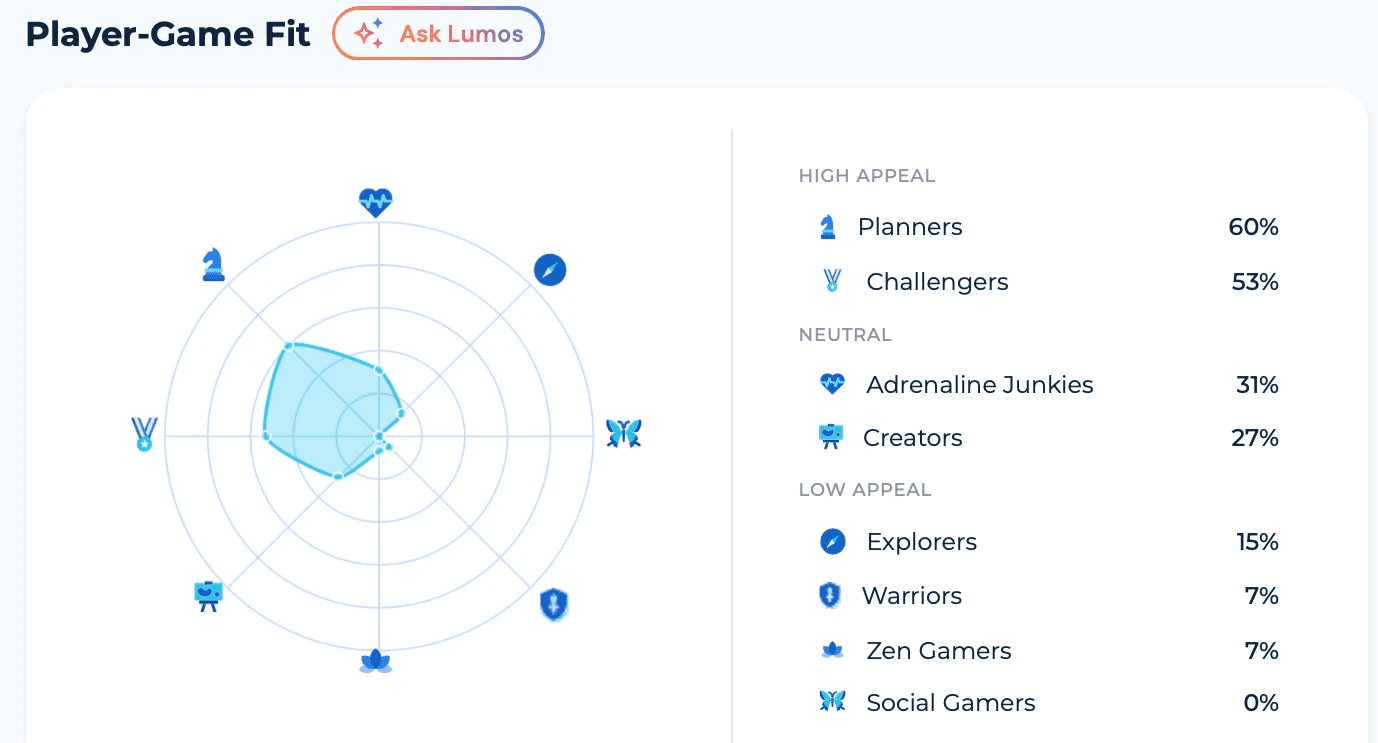
The player-game fit data is where the "why" becomes crystal clear. The game has a massive 60% appeal among Planners and 53% among Challengers. These are the "measure twice, cut once" gamers. They want systems with consequences. They want to weigh the outcome of a diplomatic treaty like they’re playing a high-stakes game of 4D chess.
Meanwhile, Explorers (15%) and Warriors (7%) are largely disinterested. This isn't a game about seeing if there are aliens over the next hill and trying to kill them; it’s about deciding what to do with the hill once you’ve found it.
The Technical Neutral Zone
It’s not all "Tea, Earl Grey, Hot," though. The sentiment data takes a sharp dive when we hit the Technical State. We’re seeing reports of crashes, infrastructure instability, and performance hitches.
It’s the classic "Great Script, Bad Projector" problem. While the voice acting and soundtrack are getting their flowers, the lack of polish in the save systems and stability is the one thing threatening to break the immersion. Even the most dedicated Vulcan will lose their cool if the game locks up during a pivotal narrative choice.
The Takeaway: Context is the Ultimate Mechanic
The lesson here for anyone working in game intelligence is simple: A feature is only a "flaw" if it's in the wrong room.
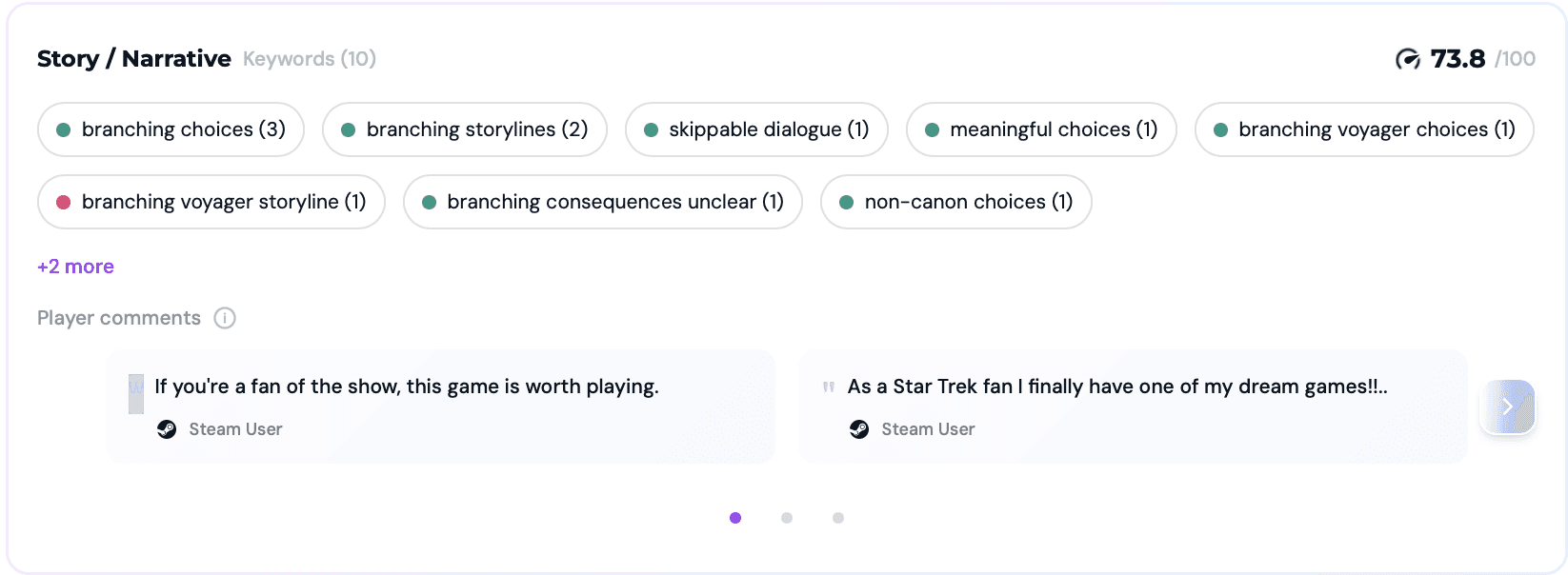
If you put Voyager’s dialogue density into Call of Duty, the player base would riot. But in the context of a franchise known for intellectual storytelling, that density becomes the "Unique Selling Point."
Star Trek: Voyager – Across the Unknown proves that you don't need to chase the "mass market" by sanding down your edges. Sometimes, the best way to win is to find your specific brand of nerd, give them exactly what they want, and let them read.
After all, they didn't come for the action. They came for Star Trek. Know what your audience wants and Make It So.
Harish Alagappa
Senior Content Writer
@Gameopedia
Senior Content Strategist. Played an irresponsible amount of Left 4 Dead 2 in college. Now I spend far too much time on Settlers of Catan. Favorite games? Ghost of Tsushima and Crush, an obscure PSP title that deserved better. I believe video games are the defining artform of our time. Why? Stick around and find out.